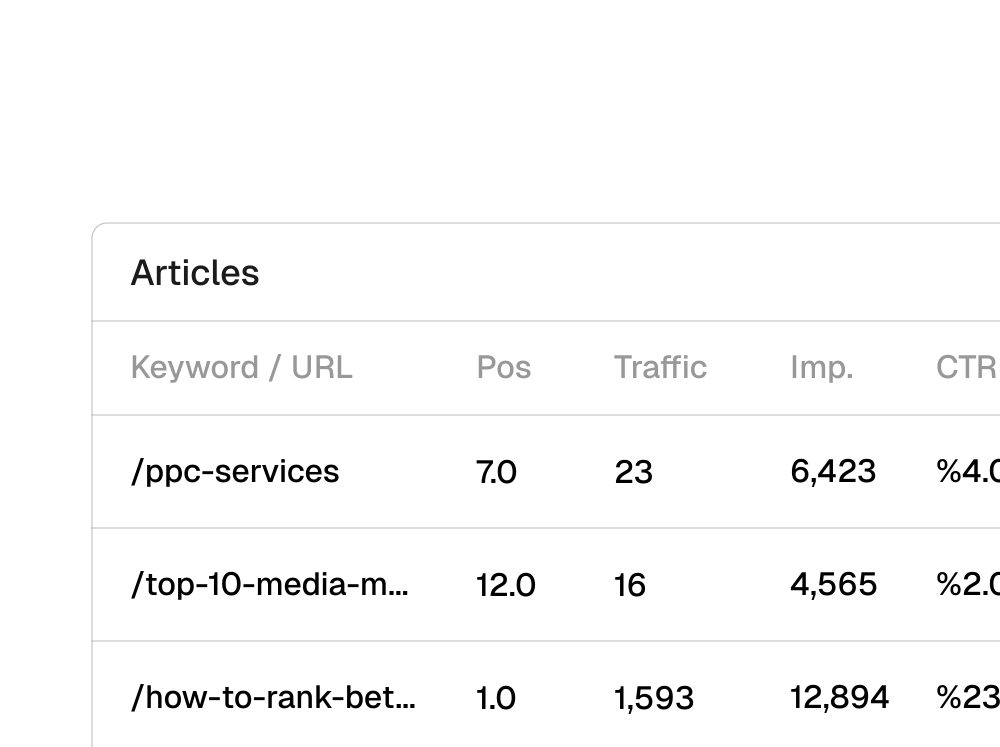
Serpy-created content
Track articles planned, written, optimized, and published from Serpy.

Serpy brings together search clicks, page performance, content scores, and AI visibility signals so you can see which pages are growing, which ones need work, and where your brand is gaining or losing visibility.
 4.7/ 5.0 out of 250 reviews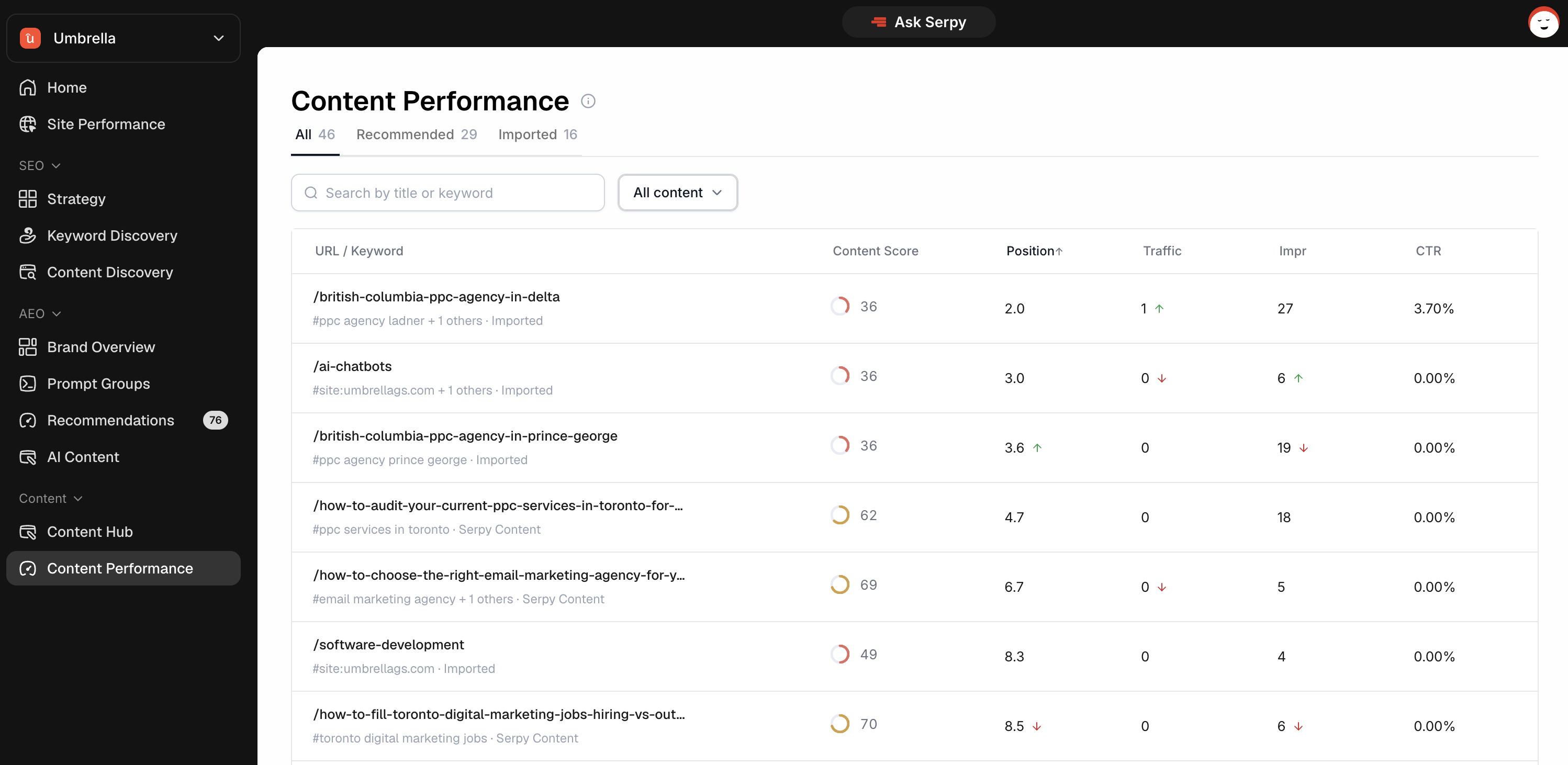
Content performance is usually split across tools: Google Search Console for traffic, your CMS for published pages, SEO tools for rankings, and separate dashboards for AI visibility. Serpy brings those signals together so you can see which pages are working, which ones are slipping, and what needs attention next.
| Before Serpy | With Serpy |
|---|---|
Search data lives in one tool | Clicks, impressions, and rankings in one view |
Content quality lives somewhere else | Content score beside page performance |
AI mentions are hard to track | AI citations and visibility connected to content |
Page updates happen reactively | Imported and Serpy-created pages tracked together |
Teams guess what to optimize next | Clear next actions from each page |
Serpy brings your new articles, existing website pages, and AI-search content into one performance layer, so you can see how each type of content is contributing after it goes live.
Track articles planned, written, optimized, and published from Serpy.
Bring existing blogs, landing pages, and service pages into Serpy so they can be measured and improved.
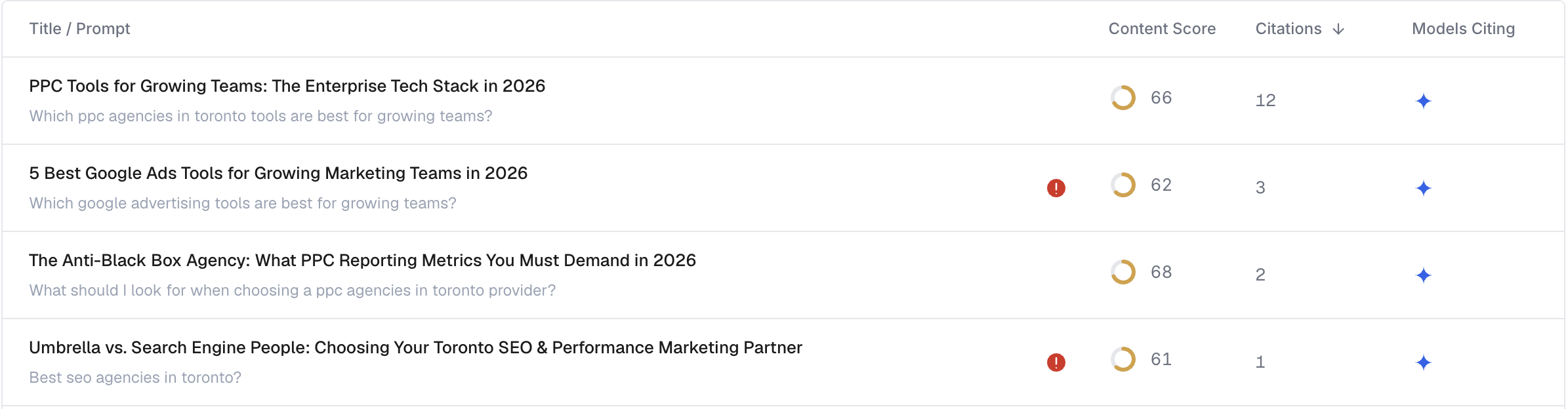
See which articles were created from AI visibility insights and whether they start earning citations in AI answers.
Serpy does not stop at publishing. Every page can be tracked, scored, optimized, and measured again, whether it was written in Serpy or imported from your existing site.
See which pages are gaining traction, losing momentum or sitting below their potential before they become invisible.
Connect performance with content quality, so you are not guessing whether the problem is search demand, weak coverage, poor structure, or missing depth.
Open the page, review what is missing and let Serpy help you make targeted improvements instead of rewriting blindly.
Keep the page in the loop after publishing changes so every update becomes something you can learn from.
When your Serpy-created articles are published, Serpy can track whether those pages start appearing as cited sources in AI answers.
When you need to zoom out, Site Performance shows how your whole website is moving in Google Search. Track clicks, impressions, CTR, average position, top pages, and top queries from one clean view connected to your Search Console data.
Performance Tracking brings together Google Search clicks, impressions, click-through rate, average position, page performance, content scores, and AI visibility signals so you can understand how your content is performing from one place.
Yes. You can import existing blog posts, landing pages, service pages, and other website content into Serpy, then track them alongside content created through Serpy’s own workflow.
Serpy connects Search Console performance data to the pages in your workspace, helping you review clicks, impressions, click-through rate, average position, top pages, and top queries without separating performance from the content itself.
Yes. Serpy can connect published content with AI visibility and citation signals, so you can see whether your pages begin appearing as sources in the answers your audience receives.
Yes. Keeping a page tracked after an update lets you review how its search and visibility signals change, making it easier to learn which improvements produced a meaningful result.
Serpy helps you identify pages that are slipping or sitting below their potential, understand possible content gaps, and move from the performance signal into targeted content improvements.
Useful metrics include clicks, impressions, click-through rate, average position, top queries, content quality signals, and whether the page earns citations in AI answers. The right combination shows both whether a page is being discovered and whether it is contributing to broader search visibility.
Rank tracking focuses on where a keyword appears in search results. Content performance tracking looks at the page as a whole, connecting rankings with impressions, clicks, queries, content quality, updates, and AI citation signals so you can understand what is changing and what to improve.
A weekly review is usually enough to spot meaningful movement without reacting to normal daily variation. Larger sites may monitor priority pages more frequently and use monthly reviews to decide which pages need updates, consolidation, or additional supporting content.
Yes. Keeping the page and its performance history together helps you review whether clicks, impressions, positions, queries, or AI visibility changed after an improvement. Search results can take time to respond, so updates should be judged over an appropriate period rather than a few days.
No. Rankings depend on competition, authority, technical health, search intent, content quality, and changes in search systems. Serpy helps you make evidence-based improvements and measure the outcome, but it does not promise a specific ranking or traffic increase.
It is built for SEO teams, content teams, agencies, consultants, and marketing leaders who want page-level search and AI visibility data connected to the content itself instead of spread across separate dashboards and reports.